Shyreen Jalasi’s daily trek is a familiar routine for millions of Malawians. Jalasi of Kainga Village, Traditional Authority Chitukula in Lilongwe, walks about three kilometres to reach the only water source in the village.
The only well in her village sits hazardously close to pit latrines. The alternative is a borehole in the next village, but that means an even earlier start and a long queue.
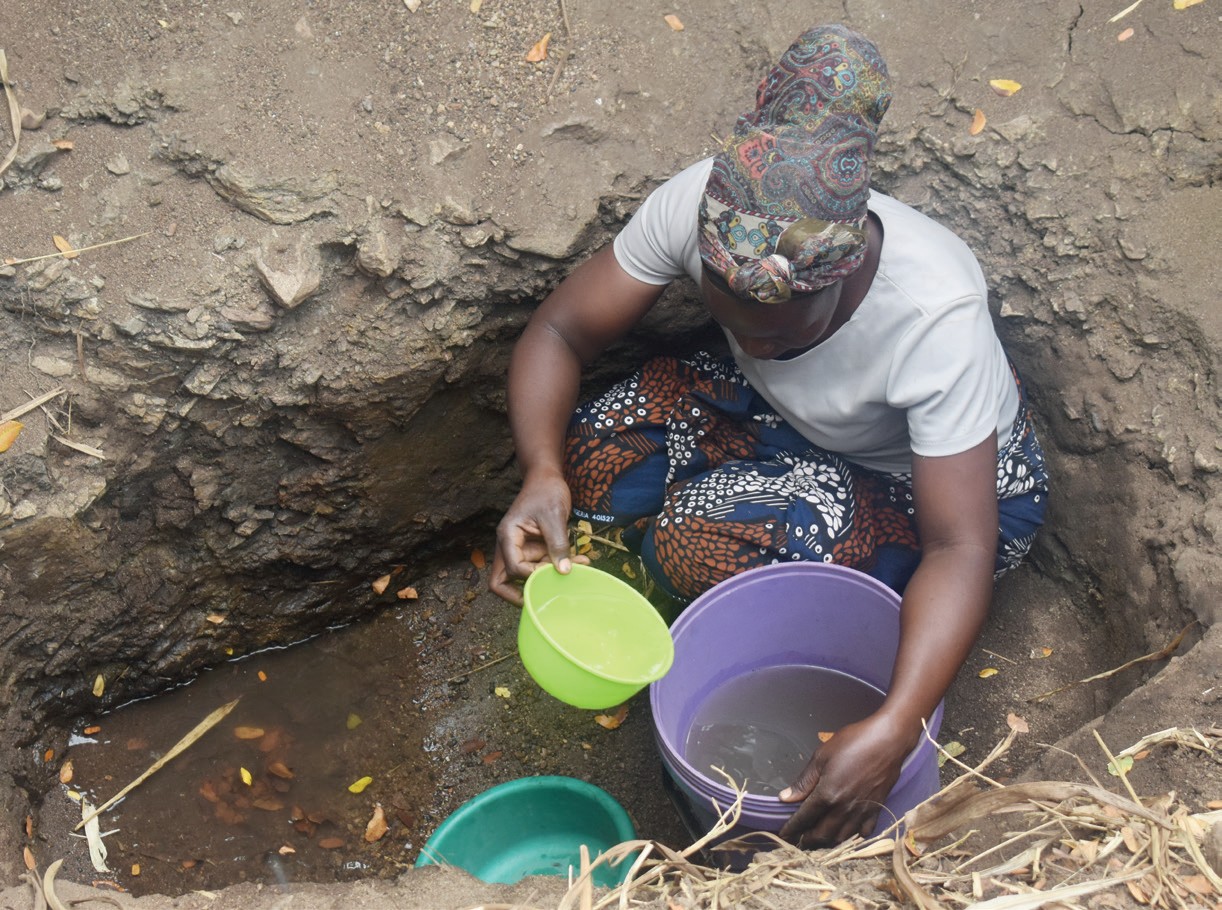
“It is a struggle to get water here. One has to wake up early and walk to the next village to queue at the borehole which also supplies water to its residents. We spend more time looking for water than working,” she said.
Although water sources are within Grace Zimbiri’s reach in Mtsiliza, she cannot afford them, forcing her to walk about three kilometres to a borehole.
“Access to clean water here is a challenge. We opt for the river to bath, wash and sometimes cook. This is because the cost of water is higher than what we can afford on a daily basis,” she said.
Maria Kanoni of Kauma in the city said residents would prefer to use clean water, but cannot afford it.
Statistics show that nine percent of the country’s population does not have access to basic water services.
Access to safe water, therefore, remains a nightmare for most Malawians, especially those in rural areas with many resorting to unprotected water sources and risking waterborne diseases.
Figures from the Ministry of Agriculture, Irrigation and Water Development show that 89 percent of the country’s population has access to clean water with 73 percent enjoying at least basic water service levels.
However, in rural areas only 69 percent of people have access to basic water services compared to 93 percent in urban areas.
Nationally, 16 percent of Malawians have limited water services meaning families must walk more than 30 minutes to fetch water and return home.
Furthermore, standpipes are the main source of drinking water in urban areas accounting for 76.9 percent followed by boreholes at 16 percent.
In rural areas, at least 73.9 percent of people use boreholes followed by standpipes at 9.2 percent.
The ministry further said estimated water availability to be at 991 cubic metres per capita per year showing a downward trend compared to the 2024/2025 and 2023/2024 periods, when availability stood at 1 018 cubic metres per capita per year and 1 044.6 cubic metres per capita per year, respectively.
It said this places Malawi in a difficult position as the country is becoming water-scarce because water availability per capita has fallen below 1 000 cubic metres per year, the benchmark commonly used to measure water scarcity based on annual renewable water resources.
Water and Environmental Sanitation Network (Wesnet) executive director Safari Mbewe said the situation poses a threat to the country’s efforts to provide clean water to its population.
He said lawmakers should improve budget allocations, especially for water access projects targeting rural Malawians.
Water Aid executive director Peter Phiri said the country needs to scale up its efforts to increase access to clean water.
He said most Malawians rely on boreholes and that figures show there are about 46 000 boreholes across the country many of which require frequent maintenance.
Ministry of Agriculture, Irrigation and Water Development Principal Secretary Erica Maganga said the country has launched a Water, Sanitation and Hygiene (Wash) compact to address the challenge.
“We plan to ensure more people have access to water and the compact we have launched, which has been endorsed by the President, gives us an opportunity to engage donor partners to fund Wash interventions,” said Maganga.